
Trimming high branches does not need to feel risky or confusing. With the right plan, safe habits, and simple tools, a yard can stay neat without leaving the ground. This guide keeps things clear and calm so branches come down in a controlled way, and everyone goes back inside with all toes intact.
When pruning makes sense
Trees do best when cuts are timed and placed well. Late winter or very early spring is a smart window for most trees because growth is slow and leaves are not in the way. Summer touch-ups are fine for small fixes. Avoid heavy pruning in early spring for maples and birches, which bleed sap. Skip pruning during nesting season if birds are active in the canopy. If a tree is sick or stressed from drought, cut less and give it time to recover.
Look for problem limbs that meet one or more of these signs: dead wood that snaps dry, cracked or split sections, rubbing or crossing branches, storm-damaged ends, or limbs growing back toward the trunk. Remove hazards first, then shape gently. A good rule is to never remove more than a quarter of the living crown in one year.
Choose simple tools and set them up well
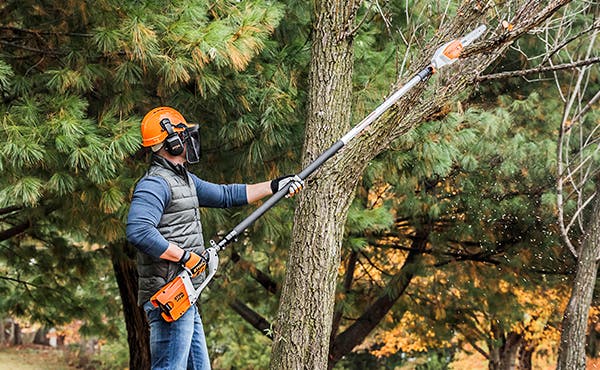
Hand pruners handle twigs. Loppers cut branches up to about two inches. A pruning saw makes clean cuts on wood that is bigger than that. For anything out of reach, a pole saw lets the blade travel up while your feet stay on solid ground. Choose a model with a secure lock on each extension and a sharp, narrow blade that starts easily.
Before any cut, gear up. Wear eye protection, gloves with good grip, long sleeves, and sturdy shoes or boots. A hard hat is smart when working under any overhead branch. Tie back long hair and remove loose jewelry. Keep pets and people well outside the drop zone—at least 15 feet, more for larger limbs.
Make the work area safe
Survey the space. Look for power lines, sheds, fences, and windows. Never prune within reach of live wires. If a branch is near a line, stop and call the utility or a licensed arborist. Plan a clear retreat path at a slight angle away from where the branch will fall. Mark the drop zone with cones, rope, or bright tape so no one wanders in.
Check the tree itself. If the trunk leans hard, the wood is cracked at the base, or mushrooms grow at the roots, the tree may be unstable. Ground pruning is not safe in that case. Call a pro.
Learn the anatomy of a good cut
Where a branch meets the trunk, there is a small raised ring of bark called the branch collar. This area helps the tree seal a wound. Cuts should sit just outside that collar. Cutting flush against the trunk removes that ring and slows healing. Leaving a long stub is not good either; it dries out and invites decay.
Small branches (under about one inch) can be cut in one smooth motion just outside the collar. Bigger limbs need a three-step method to prevent bark from tearing:
1. Undercut first. Saw upward one-third of the way through the branch, about 6–12 inches from the collar.
2. Top cut next. Move a few inches farther out and cut down until the branch breaks free. This removes most of the weight.
3. Final cut at the collar. Make the last, clean cut just outside the collar so the tree can close the wound.
Keep the saw straight and let the teeth do the work. For hand saws, use long, steady strokes. For powered tools, maintain two hands on the handle and do not force the blade.
Smart technique with a pole saw
Working overhead demands extra control. Extend only the length needed to reach the branch with arms still bent. The more the pole is extended, the harder it is to guide. Stand off to the side of the cut so the falling limb does not pass over the head. Keep the saw lined up with the branch, not twisting across it.
Start each cut with a shallow notch on the underside to lock the blade. This notch prevents the bark from ripping when the wood starts to drop. Then cut from the top a bit farther out to release the weight. Finish with the final cut near the collar. If the branch is very long, remove it in shorter sections from the tip back toward the trunk. This approach reduces swing and keeps the fall gentle.Take breaks. Shoulder and neck muscles tire fast when working overhead. Fatigue leads to sloppy cuts and poor control. A short rest helps keep things precise.
Body position and balance
Stable feet matter. Work with one foot slightly ahead of the other so the stance feels athletic, not rigid. Keep the pole saw close to the midline of the body rather than reaching far out to the side. Reposition the feet instead of leaning. If the ground is uneven, add a flat board or small work mat for a level stance. Do not prune while standing on ladders or improvised steps; ground work should stay on the ground.
Plan the fall and manage tension
Branches store tension. Wood above the limb often holds compression while the wood below holds tension. Cutting only from the top can pinch the blade. Cutting only from the bottom can splinter the bark. The undercut plus top cut method solves this problem for most limbs.
Predict the swing. A branch may roll as it falls, especially if it has side limbs. Picture the arc and steer clear of that zone. If a limb hangs after the cut and snags on another branch, do not tug or walk underneath it. Use the saw to remove the snagged part in small bites from a safe angle, or lower the hung piece with a rope from outside the drop zone.
Timing, weather, and tree health
Dry days are best. Wet bark is slick, and tools slip. Strong wind makes guiding the blade harder and can move falling limbs in odd ways. Very hot days increase stress on the tree and the worker. Cool mornings with light wind are ideal.
Clean tools help trees stay healthy. Wipe blades with rubbing alcohol between cuts when dealing with diseased wood. Do not coat fresh cuts with paint or tar. Most modern tree care leaves wounds open to dry and seal on their own.
Know when to stop and call a pro
Some jobs are not safe from the ground. Call a certified arborist when:
• The branch is thicker than eight inches or holds major weight.
• The limb is near a roof, over a fence shared with a neighbor, or close to glass.
• The tree shows root damage, trunk cracks, or heavy lean.
• Any part of the job is within reach of a power line.
Pros have rigging gear, lift access, and training that make tough cuts safe and clean.
Clean up and help the tree recover
Once the work is done, gather limbs from the outside of the drop zone inward. Cut brush to a size that stacks well so hauling is easier. Chip or compost what is healthy; bag diseased wood. Rake light and avoid gouging the soil around the roots.
Water the tree if the week is dry. A slow soak at the drip line helps. Add a thin ring of mulch two to three inches deep, kept a few inches away from the trunk. Mulch holds moisture and shields roots from heat. Watch the tree over the next few weeks. Leaves should stay green and firm. If wilting or dieback shows up, pause any more pruning and check soil moisture and pests.
Common mistakes to avoid
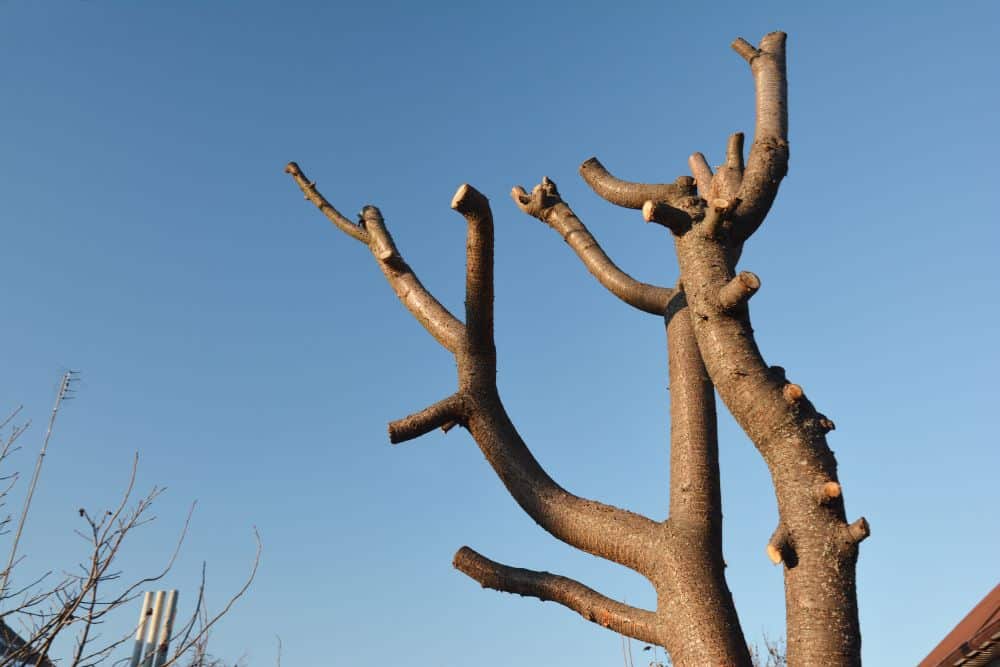
Over-pruning is the top error. Removing too much at once shocks a tree and triggers weak, fast growth that breaks later. Topping—cutting off the whole top of a tree—creates decay and a messy shape. Cutting stubs invites insects. Cutting flush at the trunk removes the collar and slows healing. Working under a branch’s fall path is also a frequent mistake. Plan each cut so the branch falls away from the body and tools.
Quick recap and next steps
Pruning from the ground can be safe and calm when a few key rules lead the work: pick the right season, protect eyes and head, mark a clear drop zone, and use the three-cut method for heavier limbs. Keep the tool sharp, stand balanced, and work in small sections when needed. Stop when a cut looks risky or the branch is near a line or roof.
With steady habits, a yard can look tidy, trees stay healthy, and weekend time remains peaceful. Review the plan, set up the space, and take it one careful cut at a time. If questions come up about timing, species care, or a tricky limb, reach out to a local tree service or extension office for advice. Safe work today leads to strong trees for years to come.
